
IntelliCourse
Lead frontend
Personalized, AI-powered learning to help people build new skills.
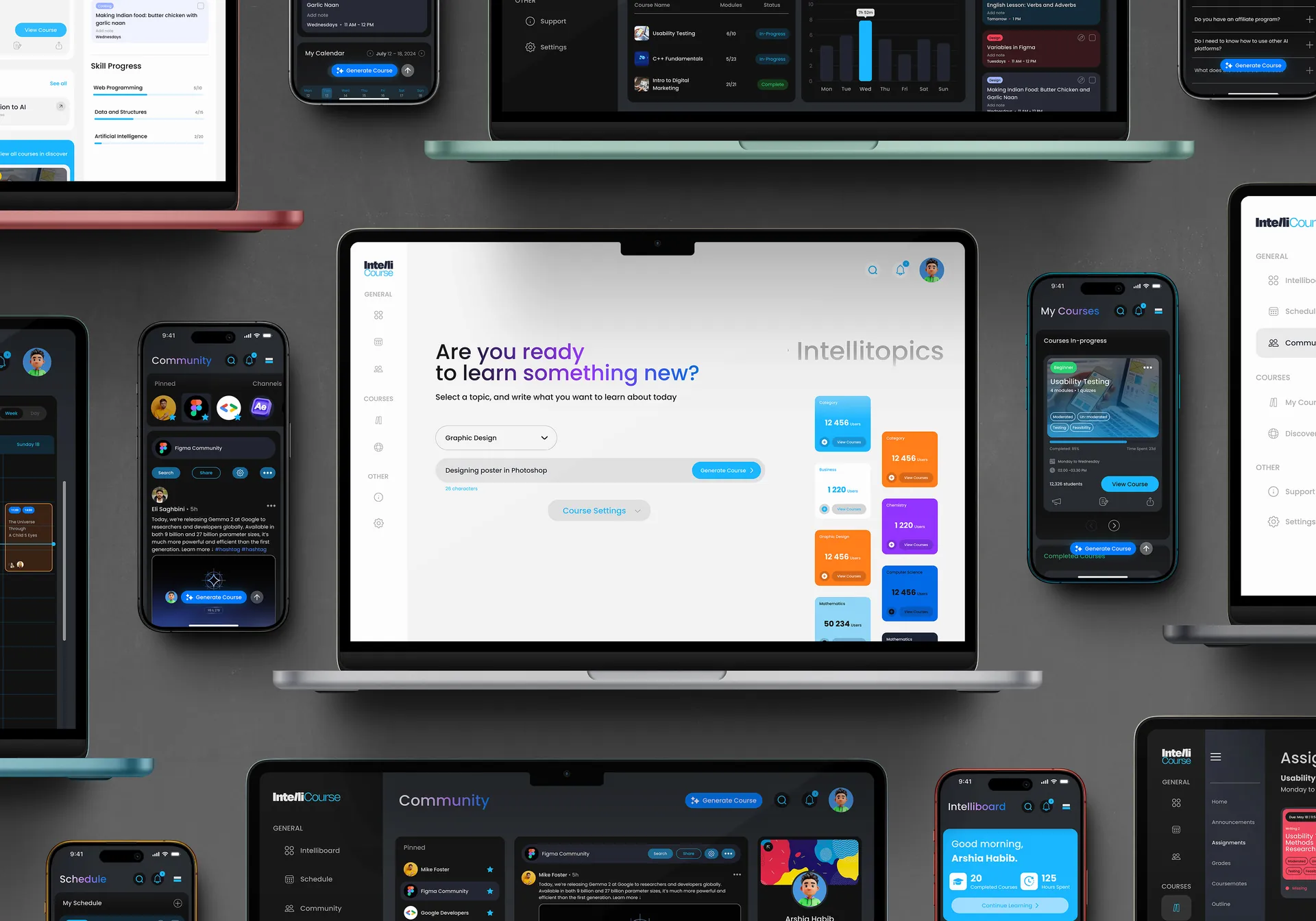
An AI-powered learning platform that generates whole courses, adapts to each learner, and grades the work, down to written feedback on a recorded presentation.
What it does
Ask for a course. Get the whole course.
Type what you want to learn, like “Python for data analysis”, and IntelliCourse comes back with modules, reading, relevant videos, and assignments in seconds. It grades the assignments too, and explains why an answer was wrong instead of just marking it.
- 01
Course generator. Built on the ChatGPT API, with the YouTube API pulling in videos that fit each module.
- 02
Offline mode. Lessons download and sync later, for students on slow or unreliable connections.
- 03
Real feedback. Grades and written notes on every assignment, even video presentations.
The mission
I led front-end implementation and interaction design.
My focus: scalable UI architecture, the design system, and performant motion.
- 01
Architecture App Router structure, layouts, and shared providers.
- 02
Component library Reusable UI components and patterns with Tailwind.
- 03
Design system Tokens, spacing scale, typography, and accessible color.
- 04
Motion Micro-interactions with Framer Motion.
Making it fast
Fast enough for a slow connection.
A lot of our learners were on patchy mobile data, so performance was product work, not polish. I took the front end through four optimization passes and measured each one with Lighthouse.
- Lighthouse performance, up from 65
- 95
- load time, down from 4.2s
- 2.1s
- time to interactive, down from 5.3s
- 2.9s
Technical architecture
Building a seamless AI learning experience requires robust engineering.
- 01
Component-driven Composable components with clear props and slots.
- 02
Server components by default Client islands only where interactivity is needed.
- 03
Form engine Multi-step flows with field-level validation.
- 04
Code-splitting Route-based and component-level splitting, with lazy loading for anything not needed right away.
- 05
Responsive images Next/Image with proper sizes to cut LCP and bandwidth.
- 06
In-view rendering IntersectionObserver-driven reveals, and offscreen work deferred.
For everyone
Accessible by default.
- 01
Semantic structure. Landmarks, a real heading hierarchy, and ARIA labels for assistive tech.
- 02
Focus and keyboard. Visible focus states, focus traps in modals, and a reviewed tab order.
- 03
Motion preferences. Reduced-motion fallbacks, short transitions, and safe easing.
Measuring it
Analytics the team could actually use.
- 01
Event hooks. Client-side hooks that emit screen and action events for funnels.
- 02
Performance marks. Custom marks and measures that tie interactions to timing.
- 03
Dashboard-ready payloads. One normalized event shape, so aggregation and charts stay simple.
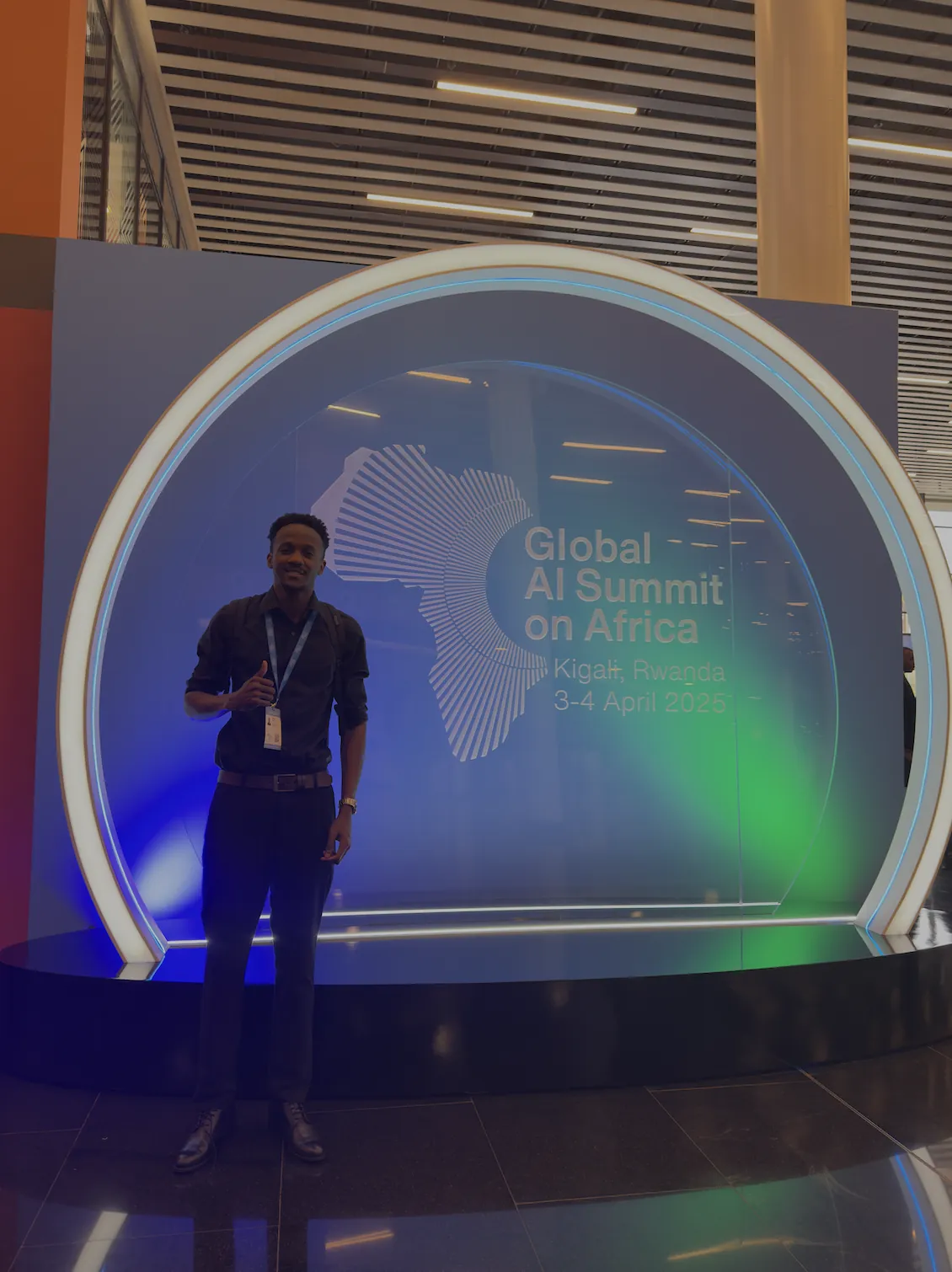
Kigali
IntelliCourse took me to the Global AI Summit in Kigali.
The Mastercard Foundation invited me as a High-Impact Engineer. I got to share how we were making personalized education work in low-connectivity areas, and hearing how it could help a student in a rural village brought me right back to why we were building it.
The team
Two designers, four developers.
A small team, so I worked closely with our product designers and back-end developers to keep design and functionality from drifting apart.
- 01
Built and maintained the front-end architecture.
- 02
Turned UI designs into components, with interactive prototypes along the way.
- 03
Implemented the design system and kept it consistent across the product.
- 04
Owned responsive, cross-browser behaviour and performance.
